

Fyrish Monument history begins with an eighteenth-century structure on Cnoc Fyrish, overlooking the Cromarty Firth near Alness. Its unusual arches are said to represent the gates of Negapatam, and its construction provided work for local unemployed people.
- Location: Cnoc Fyrish, in the parish of Alness, Highland.
- From Commercial Hotel, a hotel in Alness, it is about 3 miles away.
- The monument is a Category B listed building.
- Its design includes nine circular rubble piers and pointed arches.
When and why was Fyrish Monument built?
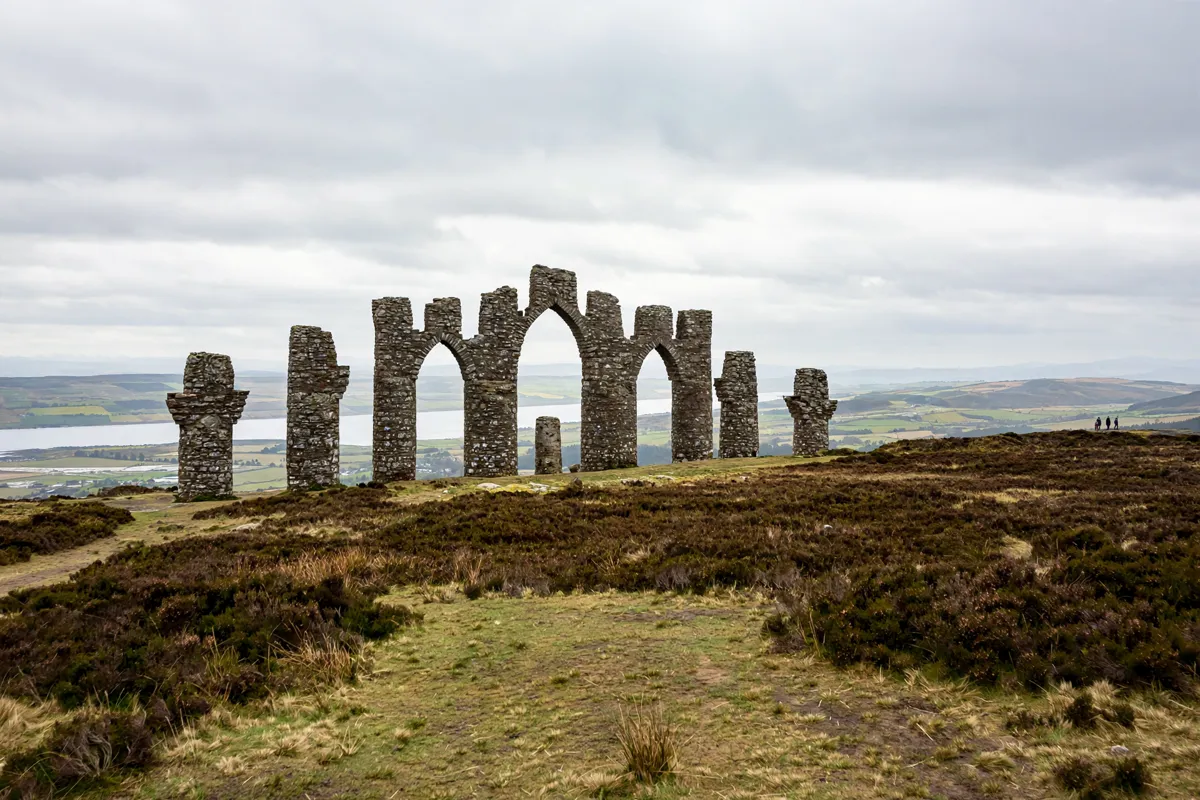
Historic Environment Scotland describes Fyrish Monument as a late-eighteenth-century picturesque monument, said to have been built by General Sir Hector Munro of Novar, who served in India. Its construction is also said to have offered work to local unemployed people.
Munro lived from 1726 to 1805. The monument is said to commemorate one of his victories in India: its form represents the gates of Negapatam, the scene of that victory. It is a Category B building in the parish of Alness, Highland, and was added to the list on 25 March 1971.
What inspired the monument’s design?
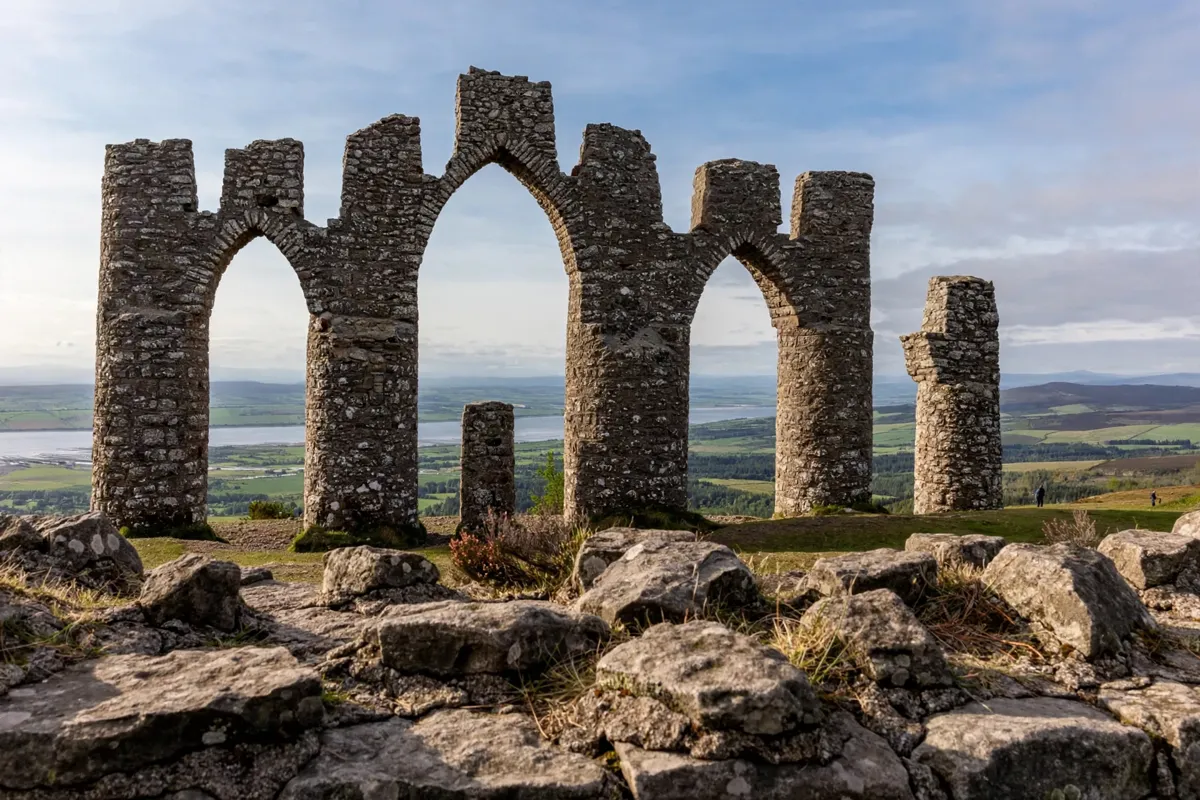
The monument’s design uses a row of nine circular piers, with pointed arches between the four central piers. The combination of rubble masonry and arches gives the structure its distinctive, unfinished appearance.
Highland Historic Environment Record describes the piers as random-rubble construction. Short masonry sections above the arches help create the impression of a ruin. The result is a structure that looks incomplete by design rather than like a conventional enclosed building.
Its association with Negapatam gives the arches a commemorative purpose as well as a visual one. The monument’s form connects Munro’s service in India with a landmark built on a Highland hillside.
How does Fyrish Monument sit in the landscape?
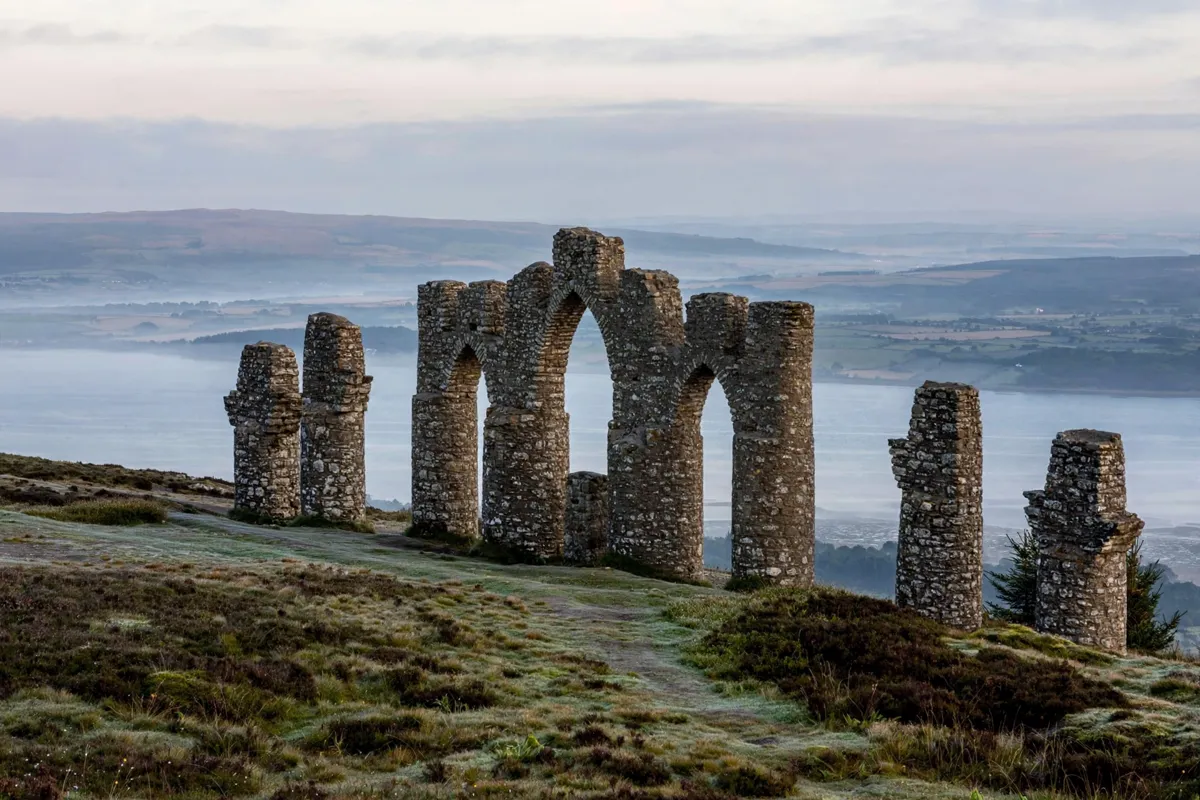
Fyrish Monument stands on Cnoc Fyrish in a commanding position above the Cromarty Firth. Its elevated setting makes the structure a local landmark, distinct from the surrounding hillside.
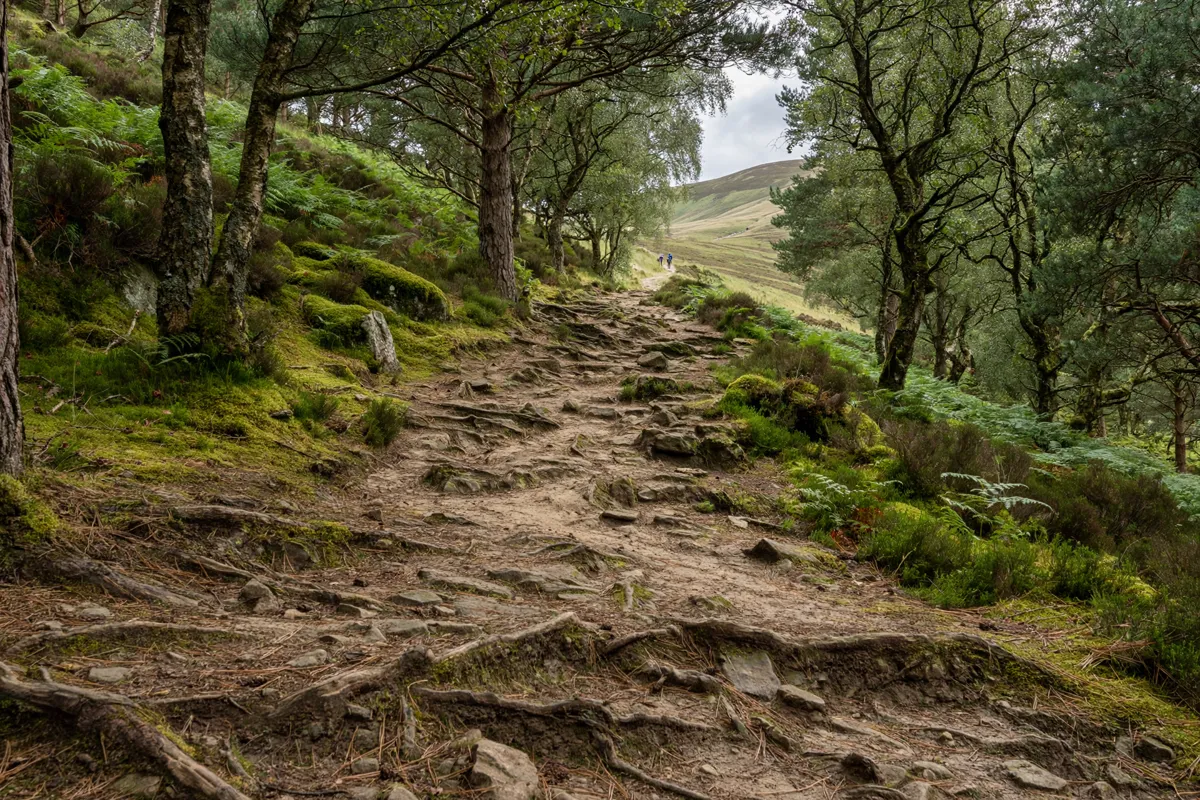
Highland Council describes the monument as a recreational destination as well as a landmark. Access paths in the area are used by walkers, runners and mountain bikers. The Novar Estate describes a route that climbs through wooded slopes to the monument, continues to Bell Tower, then descends steep, narrow woodland slopes to Little Fyrish.
If you are planning a walk, the walking routes to Fyrish Monument from Alness cover the approach.
Visiting Fyrish Monument today
The monument is reached by paths on Cnoc Fyrish, including a route through wooded slopes. The Novar Estate describes a walk that links the monument with Bell Tower and Little Fyrish, with steep, narrow woodland slopes on the descent. Check the Novar Estate’s official site before you go.
For practical access planning, where to park for Fyrish Monument is another detail to consider before setting out.
FAQs
Who built Fyrish Monument?
It is said to have been built by General Sir Hector Munro of Novar, who served in India.
What does Fyrish Monument represent?
The monument is said to represent the gates of Negapatam, the scene of one of Munro’s victories.
What is Fyrish Monument made of?
It consists of nine circular rubble piers, with pointed arches linking the four central piers.
What can you combine with a visit?
A route described by the Novar Estate continues from the monument to Bell Tower and descends to Little Fyrish.